Frontline golf property: dream location or costly mistake?
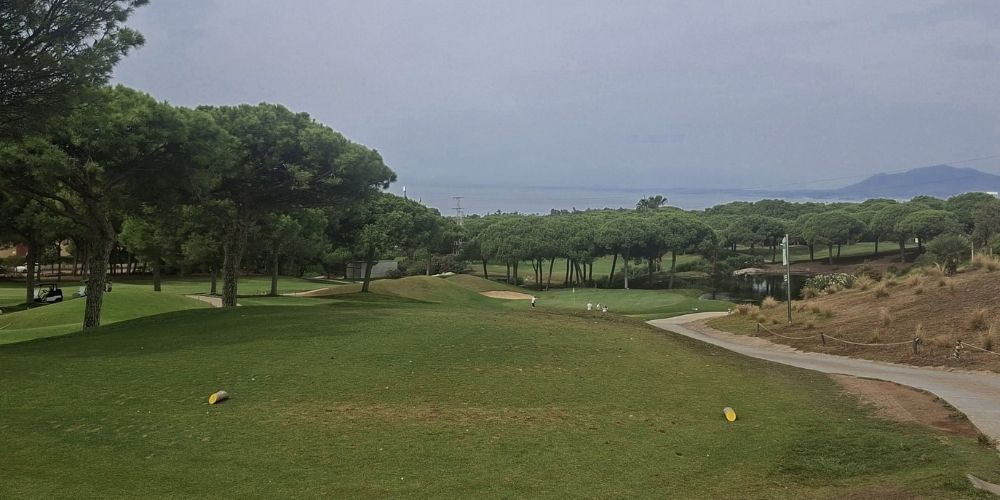
Open fairways, manicured greens and uninterrupted views can make a frontline golf property one of the most appealing homes on the Costa del Sol.
For a keen golfer, there is something particularly attractive about stepping onto the terrace and seeing the course immediately in front of you. Add sunshine, mature landscaping and the possibility of having your favourite club close by, and it is easy to understand why frontline positions can command so much attention.
But not every position beside a golf course offers the same experience.
Before paying a premium for the view, it is worth understanding exactly where the property sits in relation to the course, how that part of the course operates and what happens outside the hour you spend viewing the home.
“A golf view can be a real asset, but I never judge a frontline property from the terrace alone. I want to know exactly where it sits on the course and what that means day to day.” — Daniella van Steenwijk
Where exactly are you on the course?
“Frontline golf” is a property description, not a precise location.
A home looking across the side of a fairway can have a very different relationship with the course from one beside a tee, behind a green or close to a bunker. The direction in which golfers are playing matters too.
That is why I would want to look at the layout of the hole, not only the property photographs.
Where are players likely to stand? Where do their shots normally travel? Is the garden on the inside or outside of a dogleg? Is the terrace directly behind a green where golfers may regularly gather?
These details can make the difference between enjoying the golf action in the distance and feeling as though the course is part of your garden.
Golf views do not always mean privacy
One of the attractions of a golf property is often the feeling of openness. There may be no villa immediately opposite and no conventional street running past the terrace.
That does not necessarily mean nobody will be passing.
Golfers, greenkeepers and buggies may move through the area throughout the day. A buggy path immediately outside a garden can feel quite different from one on the opposite side of the fairway.
The same applies to greens and tees. A beautiful property beside a green may have groups of players stopping close to the boundary throughout the golfing day.
If privacy matters, it is worth standing outside for more than a few minutes and watching how that particular part of the course is actually used.
And what about stray golf balls?
A golf course is, after all, somewhere people hit golf balls.
That does not mean every frontline home will regularly receive them, but the position and direction of play should be checked rather than assumed to be irrelevant.
Look at the boundary. Is protective netting installed nearby? Can you see evidence of golf balls reaching gardens or communal areas? Ask the current owner and, where possible, neighbouring residents about their experience.
For buyers with children, pets, a swimming pool or outdoor entertaining areas, this becomes particularly relevant.
A golfer may also understand immediately why being beside one particular part of a hole could present more risk than being beside another.
The course has a working day too
Those immaculate greens, fairways and bunkers do not maintain themselves.
The Real Federación Española de Golf’s Green Section highlights the ongoing maintenance required to keep golf courses in playing condition, including planned maintenance programmes and regular course monitoring.
For the golfer, that work is part of what creates a good playing surface.
For somebody living immediately beside it, the question is different: how close are you to the operational activity?
A property that feels completely peaceful during an afternoon viewing may have machinery operating nearby earlier in the morning. If you are seriously considering the property, returning at different times can reveal far more than a single scheduled viewing.
Irrigation is another part of golf-course life
Keeping playing surfaces in good condition also requires careful water management.

Andalucian rules require golf courses to use appropriate irrigation systems and, under the regional framework, regenerated water is the standard source for golf-course irrigation. Irrigation also has to be managed so aerosolised water does not directly reach people.
From a property buyer’s perspective, the useful question is not whether the golf course irrigates — of course it does — but what is immediately beside the property.
Are there sprinklers close to the boundary? Is there a lake or other water feature nearby? How does the terrace and garden feel early in the morning or during warmer months?
These are small observations, but they are part of understanding the property rather than looking only at the view.
Look carefully at the sun as well as the golf
A spectacular golf panorama can distract attention from one of the most important features of any Costa del Sol property: orientation.
Where will the sun be in the morning? How much afternoon and evening sun reaches the terrace? Will the main outdoor space be comfortable when you expect to use it most?
The “best” orientation is not identical for every buyer.
Some people actively seek strong afternoon and evening sun. Others want shade during the hottest part of the summer. A property that will be used mainly in winter may need to be assessed differently from one occupied throughout July and August.
The course view is permanent while you are standing there. The sun moves.
Both deserve attention.
Is the golf view protected?
This is one of the areas where buyers should be particularly cautious about assumptions.
A sales description may refer to “uninterrupted”, “open” or “permanent” views, but attractive marketing language is not a substitute for checking the planning position.
You need to understand what land lies around the property and what can legally happen there. Municipalities maintain planning information and urban-development records; Marbella, for example, provides its territorial information system and current planning documents through its Urbanismo department.
Your independent lawyer should also check the property’s legal status. A Spanish Land Registry nota simple provides information about registered ownership, rights and limitations affecting the property, although planning questions need to be investigated through the appropriate planning authorities as well.
In other words, do not pay extra for a view on the basis of an assumption.
Check what you are actually buying.
Frontline does not always mean closest to the clubhouse
There can also be a psychological leap between “frontline golf” and “convenient for golf”.
They are not necessarily the same thing.
A property may overlook the 15th fairway but still require a drive around the golf community to reach the clubhouse. Another home without direct golf frontage could potentially be better positioned for the club entrance, driving range or golf academy.
For a club golfer playing several times a week, practical access could eventually matter more than being able to see a bunker from the breakfast table.
If your reason for buying frontline is primarily convenience, check that it actually delivers it.
Golf resort or residential golf community?
The wider environment matters too.
A property within a full golf resort can have a rather different atmosphere from an established residential golf community. The presence of a hotel, restaurants, holiday accommodation, golf events and other resort facilities can influence how busy an area feels at different times of year.
Neither is inherently preferable.
Some buyers actively want the energy and facilities of a golf resort. Others want a quieter residential setting where the course provides the backdrop rather than becoming the centre of everyday life.
This is another reason to visit the development when golf is actually being played rather than only at a quiet viewing time.
Are you paying for something you genuinely value?
Frontline golf property is often marketed as a premium position.
That premium may be completely worthwhile if waking up to a golf view is one of the things you most value about owning a home in Spain.
But ask yourself what you are actually paying extra for.
If two comparable properties are available and one costs considerably more because it is frontline, would you personally get enough enjoyment from that position to justify the difference?
A competitive golfer may love seeing the course every morning. A recreational golfer who plays once a week may decide that a better terrace, more privacy or another feature of the home matters more.
There is no universal answer.
View a frontline golf property like a golfer — and like a homeowner
Perhaps that is the most useful way to approach the decision.
As a golfer, look at the greens, bunkers, tees and fairways and imagine being this close to a course you enjoy.
Then look at it again as the person who will live there.
Listen for machinery. Watch where the buggies travel. Notice where golfers stop. Check the sun. Look at the boundary and investigate the planning position around the property.
Return at another time of day if you can.
Frontline golf can be an exceptional position. The point is not to avoid it, but to make sure you are paying for the reality of the position rather than the photograph of the view.
If you are considering a golf property on the Costa del Sol, I work exclusively for the buyer and can help investigate the property, its surroundings and the details that may not be obvious from an online listing or first viewing.
Next in the Golf Property Series:
Questions to ask before buying in a golf community.